Letters from the Periphery
B. S. DARA
Wars today are not decided only by guns, missiles, and airstrikes. They are decided by how the world understands what happened, who explains it better, and who appears more useful once the firing stops. This is an uncomfortable but unavoidable truth of modern geopolitics. Perception, timing, and diplomatic positioning now matter as much as battlefield action.
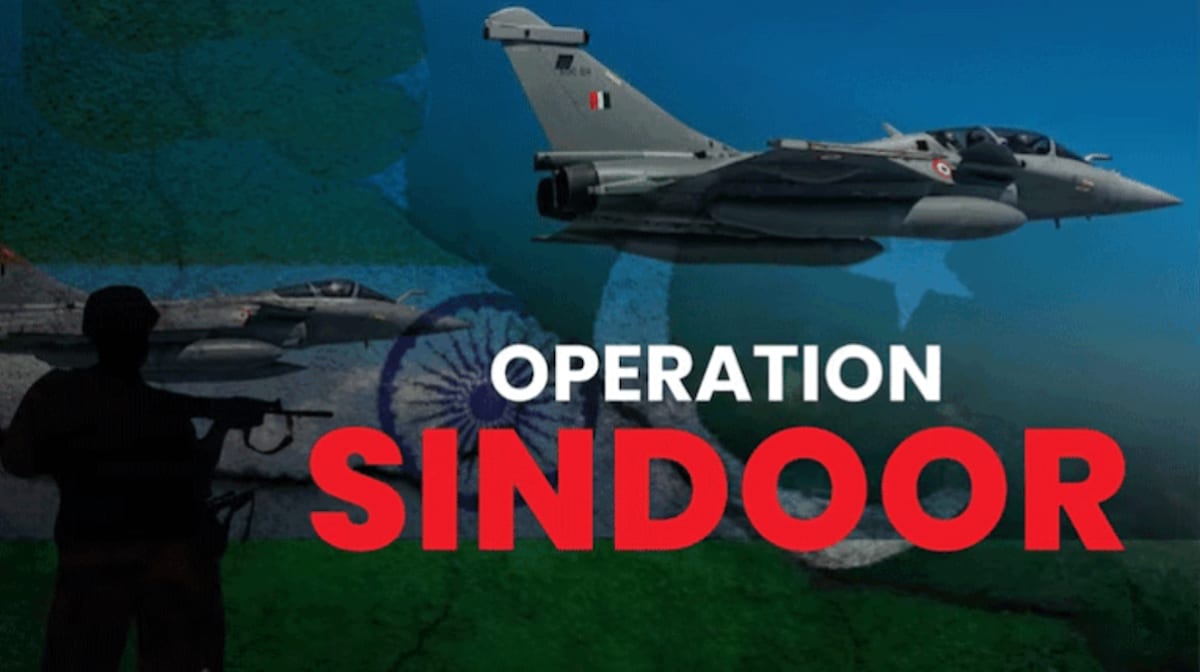
It is important to keep this in mind while reflecting on Operation Sindoor, India’s military response following the brutal terror attack in Pahalgam. The operation itself lasted only a few days. Yet its political and diplomatic consequences have travelled far beyond those four nights.
India acted because it had to. A democratic state cannot quietly absorb the killing of its civilians by cross-border terror, and do nothing. That decision requires no justification. Yet, once the dust settled, a troubling pattern emerged: Pakistan appeared to walk away with diplomatic gains. Its international standing appeared to rise, while India struggled to shape the global conversation around what had actually occurred.
This column is not about questioning India’s resolve. It is about understanding the unintended geopolitical effects of what followed.
Between 7 and 10 May 2025, India and Pakistan were involved in a limited military confrontation. There were air operations, missile strikes, and heightened alert levels across land, air, and sea. Both sides claimed success. Neither side wanted a full-scale war.
A ceasefire followed quickly. India officially stated that the ceasefire was achieved through direct military communication between the two sides. Pakistan claimed international pressure forced restraint. The United States, particularly President Donald Trump, publicly claimed credit for preventing escalation. India rejected the idea of third-party mediation.
To many ordinary readers, this may appear as diplomatic grandstanding. But in foreign affairs, who shapes the story often matters more than who initiated events. In this contest, Pakistan spoke loudly and repeatedly. India chose restraint. Within weeks of the ceasefire, three developments stood out clearly.
First, Pakistan elevated its army chief to the rank of Field Marshal, reinforcing once again the central role of its military in national life. Second, the same military chief was invited to Washington and hosted at the White House, a symbolic rehabilitation of Pakistan’s generals on the global stage. Third, Pakistan concluded a strategic defence arrangement with Saudi Arabia, projecting itself as a security partner in an unstable Middle East.
These events did not occur in a vacuum. Pakistan has long mastered a particular survival strategy of provoking tension, internationalise the crisis, and then re-emerge as a “necessary” actor. Operation Sindoor, despite India’s restraint, allowed Islamabad to dust off this playbook once again.
The Middle East today is tense and unstable. Iran, Israel, the Gulf states, and global powers are constantly reassessing their alliances. In such an environment, countries look for partners that appear militarily capable, politically relevant, and strategically positioned. After Operation Sindoor, Pakistan was seen, rightly or wrongly, as a country that had “stood its ground” against India. That perception increased its value in certain international circles.
Did Pakistan defeat India? No.
Did it match India militarily? That is debatable.
From a purely military standpoint, no decisive victory occurred. India demonstrated a powerful reach, intent, and restraint. Pakistan absorbed pressure and avoided escalation. The confrontation ended without a clear battlefield winner. But geopolitics does not function only on victories and defeats. It runs on perception. Pakistan moved quickly to present its version of events to the world. It spoke confidently, consistently, and publicly. India, by contrast, chose restraint and minimal communication. When one side explains and the other remains quiet, neutral observers often assume the speaker has something to show. In today’s media-driven global order, narrative control is a strategic asset. This confrontation was largely about air power, not old-style dogfights, but modern warfare involving long-range missiles, electronic systems, radar networks, and satellite intelligence. Such capabilities are built over years, not days.
Modern international politics rewards those who appear useful. After Operation Sindoor, Pakistan was suddenly framed as a nuclear-armed stabiliser, a military capable of “deterrence,” and a bridge between South Asia and the Middle East.
None of this reflects Pakistan’s internal reality, a country struggling with economic collapse, political instability, and extremist violence. Yet appearances matter more than balance sheets. Pakistan did not become stronger overnight. It merely became visible again. Pakistan projected the image of preparation and coordination. India did not publicly explain its air strategy and outcomes in detail. For defence observers abroad, this raised questions about communication and clarity.
Pakistan’s confidence did not emerge in isolation. Its military capability today is inseparable from Chinese support, training, technology, and systems integration. China prefers indirect pressure. It has little interest in open war with India. Pakistan serves that role efficiently. Operation Sindoor indirectly reminded the world that any India-Pakistan confrontation now carries a Chinese shadow. That perception alone complicates India’s strategic environment and emboldens Pakistan diplomatically.
India entered this confrontation with moral clarity. It responded to terrorism, not provocation. It showed restraint, not recklessness. It avoided civilian targets and escalation. Yet morality does not automatically translate into strategic advantage. India often assumes that the world will “understand” its position. Experience suggests otherwise. Global opinion is shaped less by ethics and more by repetition, visibility, and convenience. Pakistan understands this reality well. India often underestimates it.
India rightly takes pride in being a democracy. But democracy alone does not deter adversaries or impress strategists. Countries are judged by preparedness, technological depth, policy clarity, and diplomatic consistency.
China planned its rise patiently. Pakistan prepared its military quietly while selling instability as relevance. India, despite economic growth, sometimes relies too heavily on political messaging to carry strategic weight. Strong nations must not confuse slogans with strategy.
Operation Sindoor offers several lessons. It now is evidentary that limited military actions are no longer symbolic, they are global events watched in real time. That trategic silence has costs. That defence modernisation must focus on integration, technology, and space-based capabilities, not just platforms. That the political leadership of the country must resist turning military operations into emotional narratives, bacause war is not spectacle. Finally, the foreign policy must be rooted in national interest, not image management.
Operation Sindoor was justified. It was necessary. And it demonstrated India’s willingness to act. But it also revealed a familiar pattern that Pakistan did not win a war, yet once again extracted diplomatic value from confrontation. It gained relevance without reform, attention without accountability, and partnerships without responsibility. That is Pakistan’s enduring skill.
From the periphery, the conclusion is unavoidable that India’s foreign policy must evolve from reactive justification to proactive articulation. Pakistan thrives on ambiguity and international indulgence. India’s task is not to shout louder, but to speak clearly, and with authority, so that restraint is seen as confidence, and responsibility is not mistaken for weakness.
And As Faiz Ahmed Faiz’s poetry would have lamented in such moments, “Bol, ke lab azaad hain tere.”