Other Writing

The Global Consequences of the Precedent Set in Venezuela  Letters from the

Letters from the Periphery
B. S. DARA


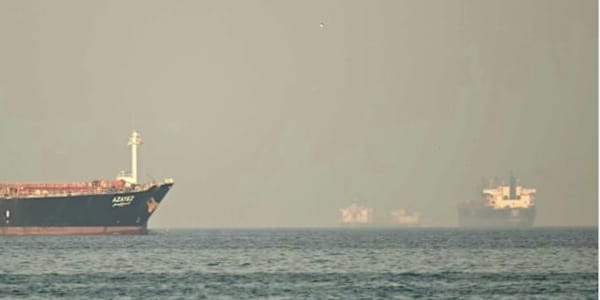
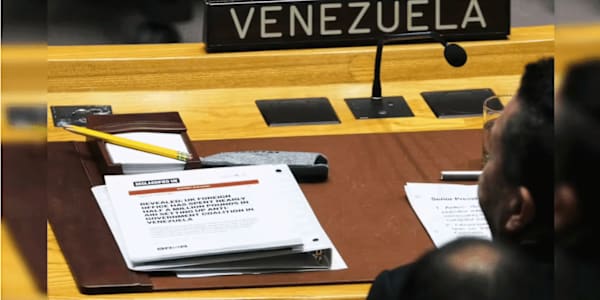
The United States has taken an extraordinary step by capturing Venezuela’s sitting leader, Nicolas Maduro, through a direct military operation and declaring its intention to oversee the country’s political transition. Whatever one’s view of Maduro, the manner in which this was done marks a significant moment in global affairs. It was not carried out through international institutions, regional consensus, and a collective mandate. It was done unilaterally,...

Lessons in Leadership I Learned from My Bosses  Letters from the

Letters from the Periphery

B. S. DARA


This is my own perspective on leadership, shaped by firsthand experience working with some of the world’s best organizations in construction project management.

Leadership is learned by watching, by observing how your boss speaks to people, how decisions are made, how mistakes are handled, and how success is shared. Over time, without realizing it, you start absorbing that behavior. You begin to lead the way you were led. You become, in many ways, a product...

How Operation Sindoor Changed Pakistan’s Defence Fortunes Letters from the

Letters from the Periphery

B. S. DARA


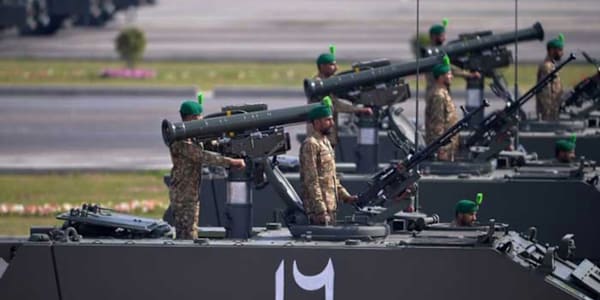
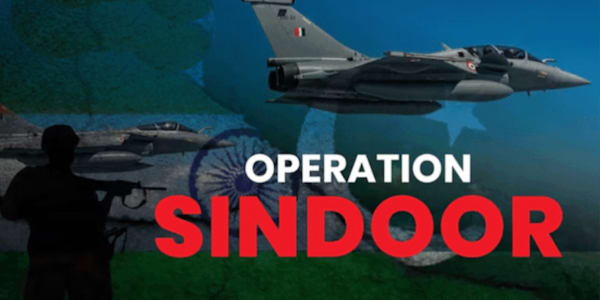
Wars today are not decided only by guns, missiles, and airstrikes. They are decided by how the world understands what happened, who explains it better, and who appears more useful once the firing stops. This is an uncomfortable but unavoidable truth of modern geopolitics. Perception, timing, and diplomatic positioning now matter as much as battlefield action.

It is important to keep this in mind while reflecting on Operation Sindoor, India’s military...

70 Years Between Moscow and Washington: Letters from the PeripheryBy: B. S.


Letters from the Periphery

By: B. S. DARA


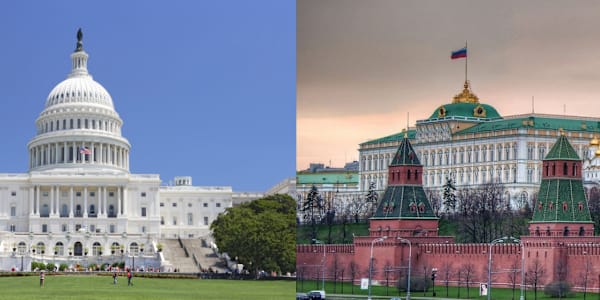
Seventy years in diplomacy is more than a measure of time. It is a long season in which loyalties are weighed, suspicions resurface, and accumulated decisions gradually harden into enduring strategic habits. India’s dealings with the major powers have rarely followed a straight or predictable path. They have shifted with circumstance, pressure, and opportunity. Yet through decades of uncertainty and adjustment, one conclusion has steadily emerged. India...

Death Verdict in Dhaka a Diplomatic Test for New Delhi Letters from the

Letters from the Periphery

By: B. S. DARA


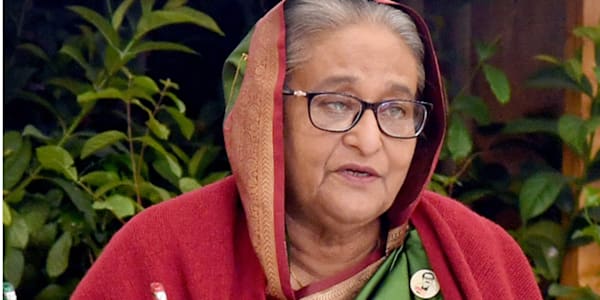
As the daughter of Bangabandhu flees to India for safety, Pakistan’s political class applauds her fall, conveniently forgetting its own role in the 1971 genocide. India now confronts a volatile neighbour, a humanitarian dilemma, and a revived battle over historical truth.

Bangladesh today finds itself in the middle of one of the gravest political breakdowns since its birth in 1971. The dramatic conviction of former Prime Minister Sheikh Hasina and the...

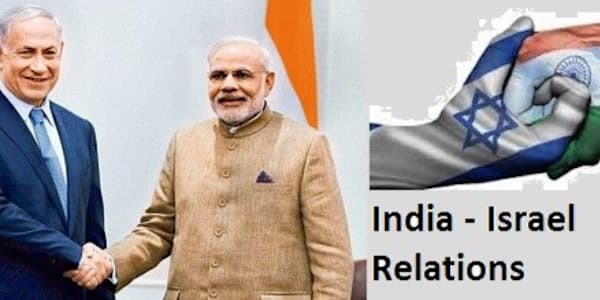
Review of Indo–Israel Relations in a Surging War Situation Letters from the

Letters from the Periphery

By: B. S. DARA


India’s foreign policy is often described as pragmatic, rooted in civilizational values, and shaped by the compulsions of geography. In the current climate of intensifying conflicts in West Asia, the Indo–Israel relationship is drawing renewed attention. Israel finds itself increasingly isolated in parts of the global community, facing criticism over its ongoing military campaigns. Yet India, rather than distancing itself, has visibly inched closer to...

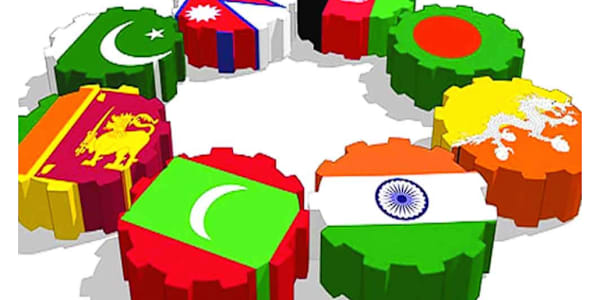
India and the Global Political Dynamics of South Asia Letters from the

Letters from the Periphery

By: B. S. DARA


From Pakistan’s internal shifts to Afghanistan’s isolation and China’s expanding footprint, New Delhi faces a complex regional landscape that demands sustained diplomatic engagement.

India today stands at the centre of a region undergoing profound political, security, and economic transitions. The neighbourhood that surrounds South Asia,extending from the Himalayan belt to the Indian Ocean, and from West Asia to the Indo-Pacific,is marked by multiple...

How Big a Threat is Pakistan to India Today? Letters from the PeripheryBy:

Letters from the Periphery

By: B. S. DARA


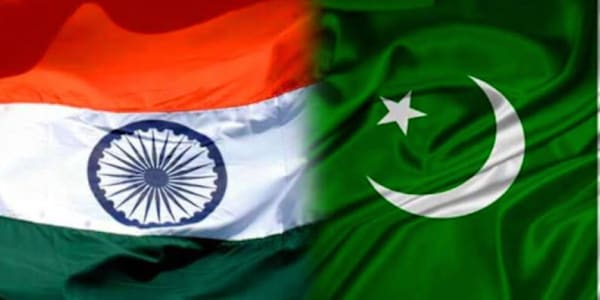
When India and Pakistan were born together in 1947, both stood at the same starting line. The world expected two new nations to find their way through hardship into stability. But seven decades on, the difference is stark. One has become the fifth-largest economy in the world, a global technology hub, and a resilient democracy. The other is a near-failed state, debt-ridden, politically fractured, ruled not by its people but by its generals. And yet,...

The Ceasefire: A Strategic Retreat? Letters from the PeripheryBy: B. S.

Letters from the Periphery

By: B. S. DARA


In the grey haze of May 2025, war broke out first in ticker tapes and touchscreen war rooms, then not in trenches. India rolled out Operation Sindoor and Pakistan countered with Operation Bunyan al-Marsoos. But what followed wasn’t war in the classical sense, it was theatre. Four days of aerial muscle-flexing, scattered missiles, and scrambled jets spiralled into something far more surreal: a high-definition shadow play where AI-generated dogfights...

Imran Khan and a Failed State Letters from the PeripheryBy: B. S. DARAImran

Letters from the Periphery

By: B. S. DARA


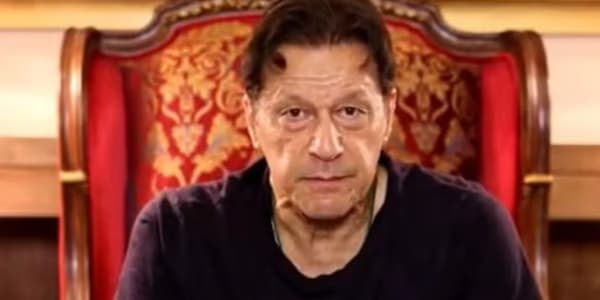
Imran Khan’s journey from cricket legend to jailed former prime minister reflects the chronic failures of the Pakistani state. It is the story of a state that has never learned to separate power from the military, truth from propaganda, and democracy from managed elections. It is the story of Pakistan.

Today, Imran Khan, once Pakistan’s most celebrated cricketer, a global celebrity, and later the self-declared crusader against corruption, has been in...
India and Pakistan: Rise and Setbacks since partition Letters from the

Letters from the Periphery

By: B. S. DARA


Following the partition of British India in August 1947, two independent nations, India and Pakistan, emerged. Despite their shared historical, cultural, and geographical origins, the paths of these countries have significantly diverged over the past 77 years. This critical analysis evaluates the progress of India and Pakistan since their independence, examining the factors behind India’s relative prosperity and Pakistan’s challenges across various...

Pakistan’s constitutional plunge into military dominance Letters from the

Letters from the Periphery

By: B. S. DARA


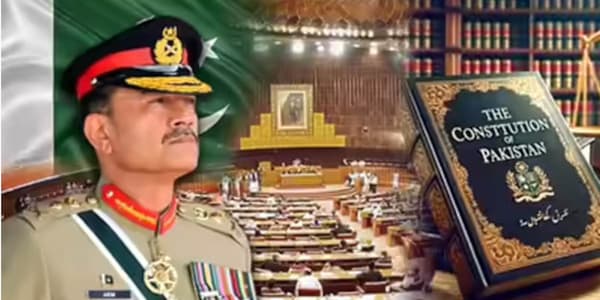
Pakistan has crossed a line that even many dictatorships hesitate to cross. Its recent constitutional amendment, which elevates the serving Army Chief to a Field-Marshal-like lifelong power centre, extends his tenure until 2030, and grants him sweeping legal immunity, is nothing short of a full constitutional surrender to military rule. It is not an internal political adjustment, as Islamabad would like the world to believe. It is a brazen, deliberate...
Nuke is not a Popgun  By: B. S. DARA Why the Israel–Iran Conflict Has

By: B. S. DARA

Why the Israel–Iran Conflict Has Become a Nuclear Time Bomb

The morning of August 6, 1945, began like any other, sunlit, serene, suspended in the hum of post-war fatigue. In Hiroshima, children laughed in schoolyards, bicycles clicked along narrow streets, and homemakers folded their morning linens. Then, at exactly 8:15 AM, the sky split. A single bomb, named Little Boy, detonated above the city. In 43 seconds, Hiroshima ceased to be a place and became a warning etched in...

By: B S DARA

In times of conflict, truth becomes not just a moral necessity but a national obligation. As India witnessed the developments around Military Operation Sindoor, our nation stood at the cusp of a moment that demanded unity, discretion, and deep resolve. Yet, what unfolded on our television screens, YouTube feeds, and social media timelines was not just irresponsible, it was dangerously incendiary. The Indian media, a section of YouTubers, and scores of anonymous social media...

Challenges India Faces in Today’s World  By: B. S.DARAIndia today finds

By: B. S.DARA

India today finds itself in one of the most volatile international environments since the Cold War. The Middle East is sliding into wider conflict, old alliances are being revived, America is gripped by its own political breakdown, and economic nationalism is spreading across the globe. For New Delhi, the world’s largest democracy and a rising voice of the Global South, these shocks carry profound consequences for security, diplomacy, and economic growth.

Two developments in...

When Champions Refuse the Cup By: B. S. DARAThe 2025 ICC Asia Cup, which

By: B. S. DARA

The 2025 ICC Asia Cup, which opened under clouds of bitterness, has ended with a thunderclap. India, undefeated throughout the tournament, humiliated Pakistan not once, not twice, but thrice in the space of two weeks , a clean 3-0 sweep. The crescendo was the Dubai final, where the men in blue thrashed their old rivals to clinch a record ninth Asia Cup title. Yet, when the smoke of fireworks cleared, there was no glittering silverware in Indian hands. Instead, there was a...

Returning Home to Encroached Nallahs-August 28, 2025 By: B. S. DARAAs an

By: B. S. DARA

As an NRI returning to my beloved Jammu this year after a long interlude abroad, I found myself deeply pleased to witness the visible transformation of my hometown. The streets gleamed, public spaces looked cleaner, and the ambitious Smart City initiative had clearly begun reimagining Jammu’s urban landscape. Let me say it plainly that Jammu is transforming.

The city’s facelift is real and, in many parts, commendable. Roads gleam under LED lights. Green belts now split traffic...

The Ideological Divide between Gandhi and Ambedkar -December 23, 2024 Share

By: B. S. DARA

The early 20th century in India was like a boiling pot of transformative social and political change, simmering with the fervour of a nation battling for independence from British colonial rule. But a very few people know that at the heart of India’s freedom struggle was a profound ideological conflict, one that pitted Gandhi’s vision of a harmonious, unified society against Ambedkar’s call for radical reform and the dismantling of the caste system. Where Gandhi’s approach was...

Rajesh Khanna and the Myth of Stardom  By: B. S. DARASome stars shine

By: B. S. DARA

Some stars shine bright. Others burn. And then there was Rajesh Khanna, the man who made India believe in love, longing, and loneliness, all at once.

From 1969 to 1972 was a time in India when the name Rajesh Khanna was a fever. He delivered 15 consecutive solo superhits, a feat untouched and unmatched. But his true triumph wasn’t just box office domination, it was the hysteria. A hysteria that curled like smoke through city streets, small-town talk, and teenage girls’ diaries....

How Operation Sindoor Changed Pakistan’s Defence Fortunes  Letters

Letters from the Periphery

By B. S. DARA


Wars today are not decided only by guns, missiles, and airstrikes. They are decided by how the world understands what happened, who explains it better, and who appears more useful once the firing stops. This is an uncomfortable but unavoidable truth of modern geopolitics. Perception, timing, and diplomatic positioning now matter as much as battlefield action.
It is important to keep this in mind while reflecting on Operation Sindoor, India’s military...