Letters from the Periphery
By: B. S. DARA
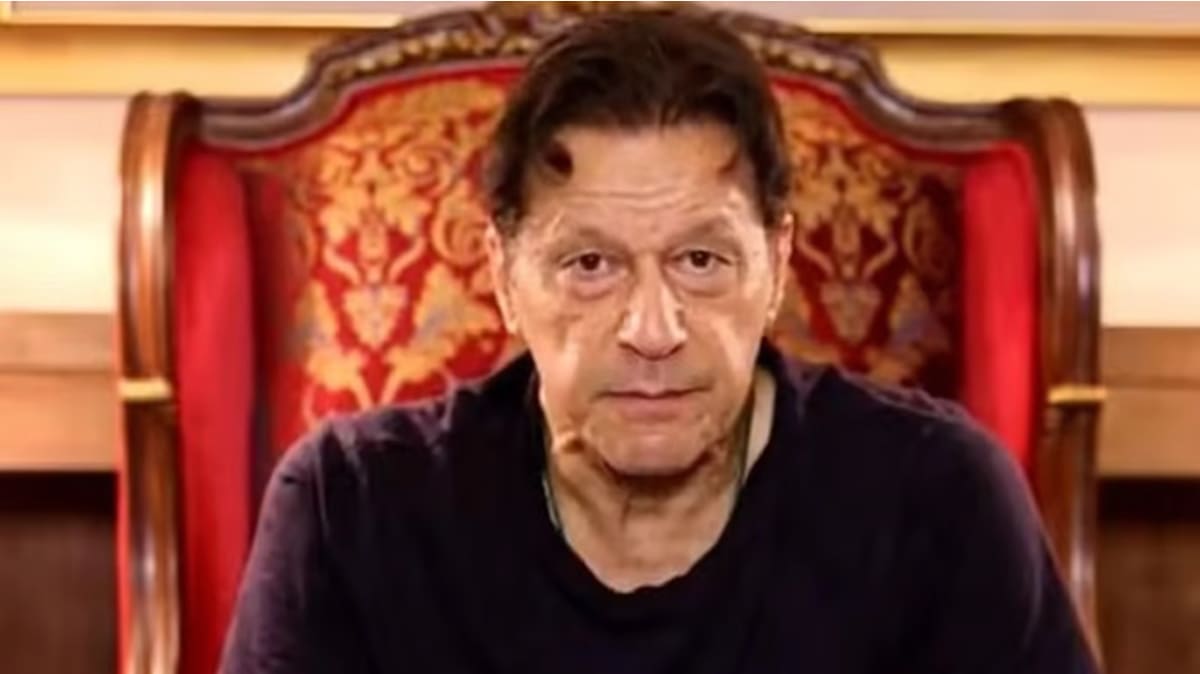
Imran Khan’s journey from cricket legend to jailed former prime minister reflects the chronic failures of the Pakistani state. It is the story of a state that has never learned to separate power from the military, truth from propaganda, and democracy from managed elections. It is the story of Pakistan.
Before politics, he was known worldwide for cricket and for his glamorous life. His relationships with some of the most famous women of his time, British heiresses, Indian celebrities, socialites, earned him a reputation as one of the biggest playboys of the sporting world. This fame became a powerful asset when Pakistan’s military establishment began projecting him as the modern face of Pakistani politics. A “sadiq” and “amin” leader, clean, honest, and untainted, that was the narrative crafted for him.
Almost immediately, attention shifted to his third wife, Bushra Bibi. A spiritual guide, she arrived with stories of “tauweez,” black magic, numerology, and influence on state decisions. These stories were dismissed as gossip at first, but they grew louder when bureaucrats began quietly confirming her role in transfers, postings, and personal grievances.
Reports emerged that Imran consulted his wife on critical decisions, from the timing of meetings to the colours he would wear. Some bureaucrats claimed that flights were delayed because his wife advised him against travelling at certain hours. Videos surfaced of him wearing spiritual threads on his wrists, supposedly for protection.
In a country battling economic collapse, rising terrorism, and diplomatic isolation, this added to the perception of a government not fully in control of itself.
Imran’s early months in power saw a dramatic string of arrests targeting the Sharif family and the PML-N leadership. For his supporters, this was long-awaited accountability. For others, it was selective justice, driven by the establishment’s agenda. The National Accountability Bureau (NAB) worked overtime, arresting opposition politicians, opening fresh cases, and summoning leaders repeatedly.
But while the Sharifs were dragged through courts and jails, Imran’s own allies remained untouched. This selective application of accountability further strained his relationship with the opposition and widened Pakistan’s political divide.
The turning point came in 2021. The ISI Chief, a crucial position in Pakistan’s power pyramid, was due for a routine transfer. Imran Khan, however, hesitated. The general in question, Faiz Hameed, was a close associate, widely believed to be the architect of Imran’s rise. His transfer should have been a simple administrative decision, but Imran resisted for weeks.
This sparked the first serious rupture between Imran and the military leadership. For the military, this was insubordination. For Imran, it was an existential threat. The matter escalated internally. Meetings dragged. Statements were released. Confusion spread.
Within weeks, the military withdrew its political umbrella.
The opposition sensed vulnerability and moved swiftly with a no-confidence motion. What followed was a chaotic political saga.Allegations of foreign conspiracies, midnight court sessions, constitutional breakdowns, and last-moment dramas. Eventually, Imran Khan fell. His party lost the majority. Imran refused to vacate the Prime Minister’s House for several hours, calling the entire process an “international conspiracy” backed by the U.S. and executed by Pakistan’s generals.
It was the beginning of the end.
On 9 May 2023, after Imran’s brief arrest at the Islamabad High Court, nationwide riots erupted. PTI supporters attacked military buildings, torching the Corps Commander’s residence in Lahore, storming cantonments, and clashing with troops. It was unprecedented. No civilian group had dared attack military installations on this scale in Pakistan’s history.
The military responded with full force. Thousands were arrested. Women activists were jailed. Senior PTI leaders were forced, on camera, to resign. Hundreds of cases, including terrorism charges, were filed against Imran Khan.
The military vowed to “teach a lesson.”
When General Asim Munir took over as Chief of Army Staff, he brought a personal grievance. Years earlier, when he served as DG ISI, he had reportedly briefed Imran Khan about the political interference of Bushra Bibi in Punjab’s governance. Imran responded not by addressing the issue, but by removing Asim Munir from the intelligence post.
That humiliation never faded.
As COAS, Asim Munir moved quickly and decisively. Imran Khan was hit with case after case, corruption, rioting, leaking secrets, land issues, illegal marriage allegations, and more. Bushra Bibi herself was arrested. The former ISI chief who had backed Imran’s political rise was arrested and interrogated.
Then came the legislative bombshell. Asim Munir was promoted to Field Marshal, with legal impunity for life under the 24th Amendment. Pakistan’s military finally received what it had always wanted. constitutional permanence.
Pakistan today claims to be a parliamentary democracy, but it is a democracy in name only. Every major election in the last three decades has carried the shadow of military engineering. Political parties exist, but only within boundaries set by Rawalpindi. Courts function, but only as long as their decisions align with military expectations. Media speaks, but only within invisible red lines.
Imran Khan once benefited from this structure. He campaigned with military help, governed with military support, and punished opponents using military-backed institutions. But like all leaders before him, he eventually collided with the real power centre.
And like all of them, he was removed.
Today, Imran Khan is isolated in a high-security prison. For more than a month, he has been denied lawyer access and family visits. Even his party officials cannot meet him. When court hearings are scheduled, authorities cite “security threats” or “logistical issues.”
His physical and mental condition remains unknown. Meanwhile, the country is in disarray.Inflation is at historic highs, the rupee is in free fall, terrorism is resurging, and the IMF’s conditions grow tougher by the month.
Elections have produced yet another hybrid government, a PML-N and PPP coalition supported by the military. The same old cycle continues.
Pakistan today fits the classic definition of a state in failure. Institutions are collapsing.Judiciary is inconsistent and politically influenced.Military controls politics, economy, and foreign policy.Journalists are threatened or exiled.The economy survives on loans, not growth.Political leaders are character-assassinated or jailed.Civil liberties shrink year after year.
Imran Khan’s downfall is not an exceptional case. It is the inevitable outcome of a system designed to keep elected leaders in check while keeping the military beyond accountability.
He is both a product and a prisoner of that system.
Imran Khan once promised a “Naya Pakistan.” But Pakistan’s reality has remained unchanged. A nation run by unelected generals, manipulated institutions, and cyclical political engineering.
Imran Khan rose because the military needed him.He fell because the military no longer did.
His personal flaws, political missteps, and controversial influences only accelerated the process, but the system itself ensured his demise. Today, Pakistan is not just facing a leadership crisis. It is facing a structural collapse, political, economic, judicial, and institutional.
Imran Khan’s tragedy is that he believed he could control the system that created him. Pakistan’s tragedy is that it still cannot escape that very system.
Until Pakistan breaks the cycle, no leader, not Imran, not Sharif, not Bhutto, will ever truly govern. The country will continue drifting, as it has for decades, toward deeper instability and failure.
And Imran Khan, sitting in a prison cell with no access to the outside world, is now the most visible symbol of that failure.